

Madina Rahimova✓
27 · New York, NY
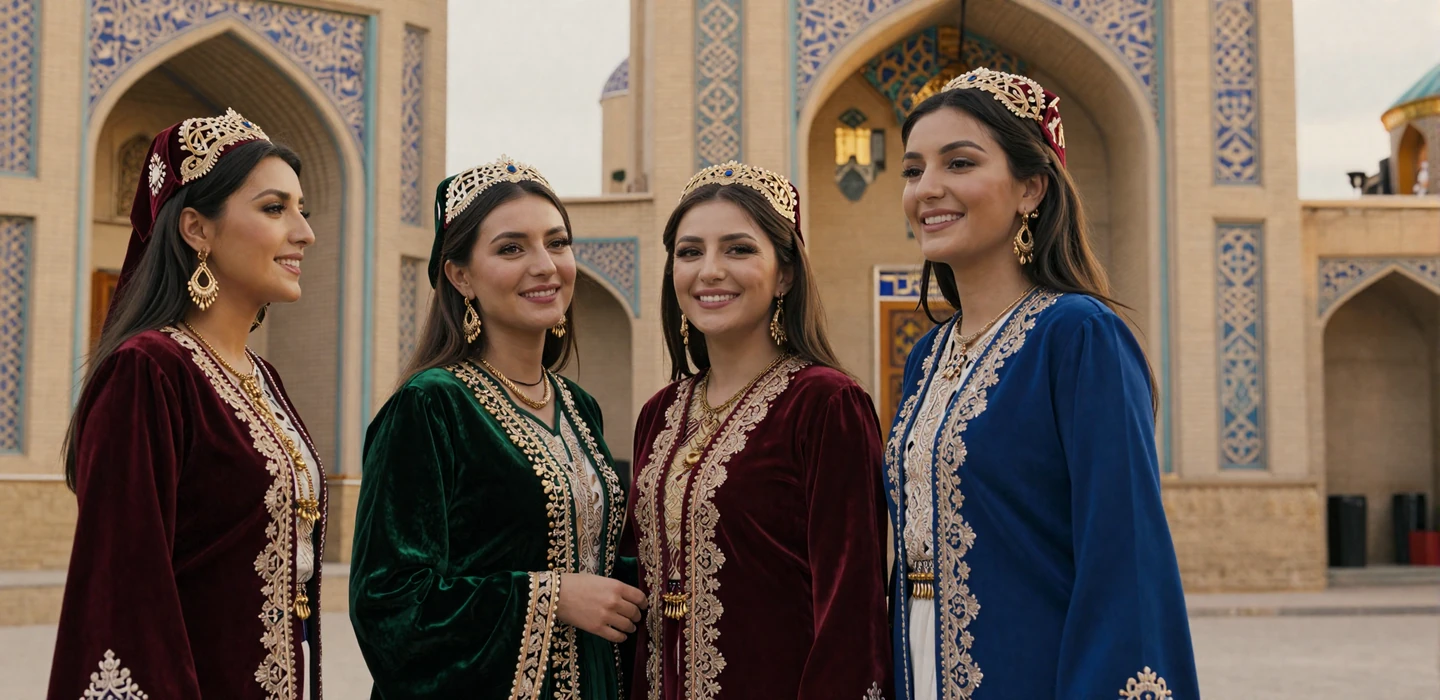
Connect with verified Tajik women in the USA who carry the grace of Persian heritage, deep family values, and a genuine desire for lasting partnership. Begin your cross-cultural love story on America's most trusted Asian dating platform.
Tajik women dating in the United States opens a pathway to one of Central Asia's most culturally refined, family-devoted, and intellectually rich relationship traditions. Tajikistan - the only Persian-speaking nation in Central Asia - carries a heritage directly descended from the great civilizations of Samanid Bukhara, the poetry of Rumi and Hafez, and centuries of Silk Road sophistication that shapes how Tajik women approach love, partnership, and family life today.
If you are an American man seeking a meaningful, long-term relationship with a Tajik woman, understanding her Persian-rooted cultural identity is the most powerful investment you can make. Tajik women value sincerity, intellectual depth, and emotional consistency above all else - qualities that distinguish genuine suitors from passing curiosity.
Unlike their Turkic-speaking Central Asian neighbors, Tajik people speak Tajik Persian (a dialect closely related to Farsi and Dari), connecting them linguistically and culturally to Iran and Afghanistan. This Persian foundation shapes every dimension of Tajik courtship: from the poetry woven into romantic expression, to the elaborate hospitality rituals that signal genuine welcome, to the deep respect for education and intellectual accomplishment that defines partner selection.
Tajik women often express affection through subtle, poetic gestures rather than overt declarations. A carefully prepared meal, a recitation from Rudaki or Omar Khayyam, or a gift of dried fruits and almonds carries profound romantic significance. Understanding this nuanced communication style separates culturally aware men from those who miss the quiet depth of Tajik romantic expression.
The Persian cultural threads in Tajik heritage create natural connections with the courtship traditions found in Afghan women dating, where Dari speakers share a nearly identical literary and culinary tradition. The broader Central Asian family values resonate powerfully with the customs you will encounter in Uzbek women dating cultures as well.
Tajikistan is not culturally monolithic. Women from the capital Dushanbe tend to be more cosmopolitan, highly educated, and comfortable with modern dating dynamics. Women from the Pamir Mountains (Badakhshan) carry a distinct Ismaili Muslim tradition that is notably progressive regarding women's education and participation in public life. Women from the Fergana Valley region (Khujand) reflect a blend of Tajik and Uzbek cultural influences, with particularly strong family networks and hospitality traditions.
Understanding which region your Tajik partner identifies with demonstrates genuine cultural curiosity and respect - qualities that Tajik women find deeply attractive in a potential life partner.
| Aspect | Tajik-American Diaspora | Traditional Tajik |
|---|---|---|
| Partner Selection | Self-chosen with family guidance and blessing | Family-initiated introductions with community vetting |
| First Meeting | Coffee dates, cultural events, family gatherings | Chaperoned visits with elders present |
| Communication Style | Open and warm, blending English and Tajik Persian | Indirect, through family intermediaries initially |
| Marriage Timeline | 6-18 months of courtship before formal engagement | Shorter courtship with early formal commitment |
| Family Involvement | Advisory and supportive, respecting woman's preferences | Central decision-making role |
| Religious Expectations | Varies from cultural to devout observance | Strong Islamic practice expected |
27 · New York, NY
30 · Alexandria, VA
25 · Chicago, IL

29 · Houston, TX
26 · San Francisco, CA

32 · Sacramento, CA
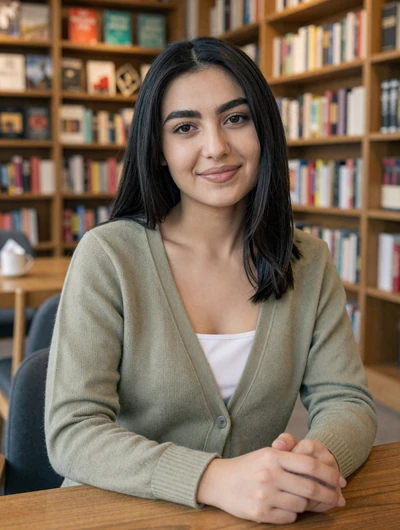
24 · Seattle, WA
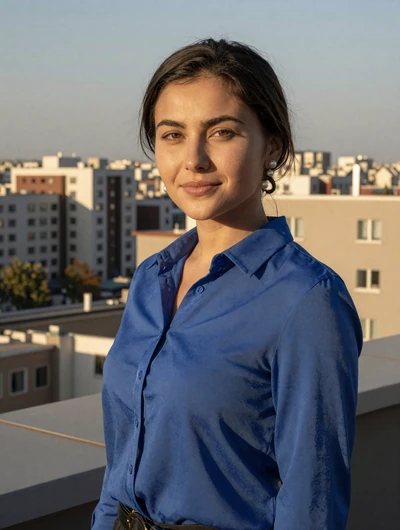
28 · Dallas, TX
In Tajik culture, romance exists within the protective, nurturing framework of family. A Tajik woman does not simply evaluate a man on his individual merits - she considers how he will fit within her family's values, honor, and long-term aspirations. Understanding the central role of family in Tajik courtship is essential for any American man who wants to build a genuine, lasting partnership with a Tajik woman in 2026.
Traditional Tajik courtship follows a structured progression that, even among diaspora families, retains its fundamental character. Each stage deepens the bond between both families and signals increasing seriousness of intent:
In Tajik families, the opinions of elders - particularly the father, paternal uncles, and grandparents - carry significant weight in partner selection. This collective process ensures that marriages are built on foundations stronger than romantic chemistry alone: financial stability, moral character, community reputation, and cultural compatibility.
Among Tajik-American families in cities like New York, Sacramento, and Chicago, this process has evolved to become more collaborative. Parents serve as trusted advisors, and the woman's own preferences are given substantial weight. However, the expectation that her family's guidance will be respected remains a non-negotiable cultural value.
Pro Tip: When meeting her family for the first time, bring a generous gift of high-quality pastries, dried fruits, or boxed sweets. Greet her father and elder males first with a firm handshake and warm eye contact. Address her parents as "Ota" (Father) and "Ona" (Mother) - or "Uncle" and "Auntie" if they prefer. Remove your shoes before entering the home. Accept every cup of tea and plate of food offered, as refusing is considered disrespectful. These gestures communicate sincerity more powerfully than any words.
The family courtship dynamics in Tajik culture share deep parallels with neighboring traditions. If you appreciate the depth of Tajik family values, you will find similar warmth when exploring Kyrgyz women dating and Turkmen women dating customs, where family approval and community bonds are equally central.
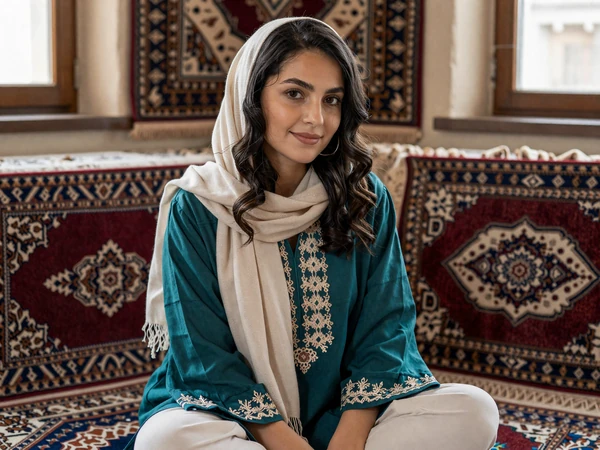
Islam is the predominant faith in Tajikistan, with approximately 95% of the population identifying as Sunni Muslim (primarily Hanafi school). However, Tajikistan's Islamic practice is uniquely shaped by its Persian heritage, Soviet-era secular influences, and the pragmatic spirituality that characterizes Central Asian Muslims - creating a religious landscape more moderate and culturally integrated than many outsiders expect.
For American men dating Tajik women, understanding this nuanced religious identity is essential. Tajik women may observe Islamic traditions selectively - celebrating Ramadan and Eid, respecting modest dress codes in family settings, and expecting a nikoh ceremony - while also embracing secular education, professional careers, and modern social interactions.
Several Islamic principles directly shape how Tajik women approach romantic partnerships:
This is one of the most common questions from American men interested in Tajik women. The answer depends entirely on the individual woman and her family. In more traditional families, conversion (or at minimum a formal profession of Islamic faith) may be expected. In many diaspora families, genuine respect for Islamic values - combined with honest dialogue about how religion will be practiced in your household - is sufficient. The universal requirement is sincerity: Tajik families can identify performative religious gestures instantly and respond negatively to perceived dishonesty.
| Islamic Norm | Traditional Practice | Modern Diaspora Approach |
|---|---|---|
| Hijab/Head Covering | Expected in public and family gatherings | Personal choice; often worn only at religious events |
| Ramadan Observance | Full month of fasting and prayer | Fasting observed; social celebrations emphasized |
| Pre-Marital Interaction | Chaperoned meetings; limited private contact | Casual dates acceptable with family awareness |
| Groom's Religion | Muslim faith required before nikoh | Respect for Islam often sufficient; varies by family |
| Alcohol Consumption | Prohibited (haram) | Moderate social drinking tolerated in some families |
The Islamic courtship values in Tajik dating share significant common ground with the faith-based relationship structures you will discover in Uzbek women dating and Afghan women dating, where Islamic traditions and cultural warmth form the dual foundation of lasting partnerships.
Tajik culture is built upon mehmonnavozi - a sacred tradition of hospitality so deeply ingrained that it functions as a moral obligation rather than a social nicety. When a Tajik woman welcomes you into her life, she extends the full warmth of a culture where guests are treated as blessings and where food, conversation, and generosity are the primary languages of love.
Green tea (choi kabud) is offered constantly as a gesture of welcome and respect. Always accept with gratitude - it represents the host's sincerity and desire to connect.
Osh (plov/pilaf) is the national dish - fragrant rice with lamb, carrots, and spices. Sharing plov together symbolizes family unity and celebration of togetherness.
Tajik homes are always open to guests. When visiting, expect elaborate spreads of dried fruits, nuts, flatbread, and sweets - a dastarkhan laid with love and pride.
Gift-giving and selfless generosity define Tajik relationships. When a Tajik woman gives, she gives fully - expecting not repayment, but reciprocal sincerity.
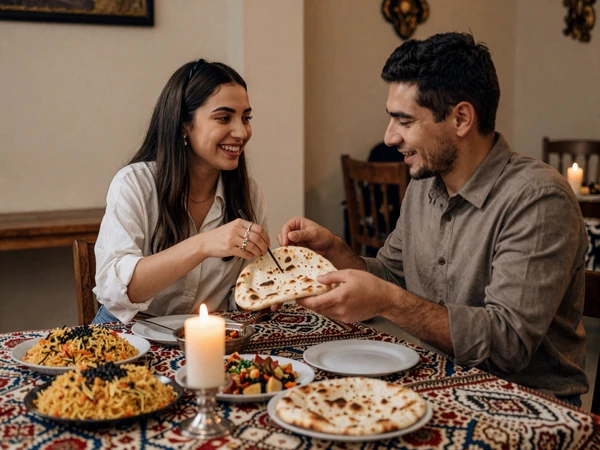
In Tajik culture, preparing and sharing food is the most intimate expression of care and affection. When a Tajik woman cooks for you, she is investing time, skill, and emotional labor that communicates love far deeper than verbal declarations. Show appreciation and curiosity about these foundational dishes:
Nowruz - the Persian New Year celebrated on March 20-21 - is the most important cultural holiday in Tajik life. Attending a Nowruz celebration with your Tajik partner or in her community demonstrates cultural investment that earns immediate respect from her and her family. The holiday centers around the Haft Sin table, Sumalak (a sacred wheat pudding prepared communally over an all-night fire), new clothing, family feasts, and a spirit of renewal and hope.
In Tajik-American communities, Nowruz events draw families together for music, dancing, elaborate meals, and cultural performances. If you are dating a Tajik woman, asking to celebrate Nowruz together signals serious intent and genuine cultural respect. This celebration connects Tajik families with the broader Persian cultural world, creating natural bonds with the Nowruz traditions also celebrated by Afghan women and Iranian communities across America.
Tajik women bring extraordinary qualities to a partnership - deep loyalty, cultural sophistication, intellectual curiosity, and a family-first commitment that creates a home of warmth and stability. In return, they seek specific qualities in a partner. Understanding these expectations positions you for a genuine, lasting connection built on mutual respect rather than assumptions.
American men who have built relationships with Tajik women consistently highlight these extraordinary qualities:
These qualities reflect a broader Central Asian tradition of devoted partnership. The warmth you find in Tajik women shares beautiful parallels with the values celebrated in Kyrgyz women dating and Turkmen women dating cultures, where family devotion and cultural pride create equally deep foundations for lasting love.
If your relationship with a Tajik woman living outside the United States progresses toward marriage, the K-1 fiancée visa is the primary pathway. Key considerations specific to Tajik applicants:
Tajikistan Standard Time is 10 hours ahead of US Eastern Time. Successful long-distance couples on our platform maintain connection through:
Tajik women carry a distinct Persian heritage that sets them apart from their Turkic-speaking Central Asian neighbors. They speak Tajik Persian (closely related to Farsi and Dari), draw from a literary tradition that includes Rumi and Hafez, and approach romance with a poetic sensibility and intellectual depth rooted in centuries of Persian civilization. This Persian cultural foundation shapes their communication style, hospitality traditions, and relationship values in ways that are uniquely refined and emotionally rich.
Family approval is essential in Tajik culture and often determines whether a relationship can progress to marriage. The formal khostgori (family proposal visit) is a pivotal milestone where the man's character, career stability, and sincerity are evaluated by her parents and elders. Among Tajik-American families, this process has become more collaborative - parents serve as trusted advisors while respecting the woman's preferences - but the expectation of family involvement remains a core cultural value.
This depends entirely on the individual woman and her family. In more traditional Tajik families, conversion to Islam or a formal profession of faith may be expected before the nikoh ceremony. However, many modern Tajik-American families are flexible if the man demonstrates genuine respect for Islamic values and agrees to raise children with awareness of Tajik Muslim traditions. Open, honest dialogue about religion early in the relationship is essential - approach the topic with humility and genuine curiosity rather than defensiveness.
The Tajik-American community numbers approximately 55,000 people and is concentrated in New York, Northern Virginia, Sacramento, Chicago, and the San Francisco Bay Area. These communities maintain active cultural organizations, celebrate Nowruz and Eid together, and host regular social events. Many Tajik-American women are highly educated professionals who balance deep cultural pride with full engagement in American professional and social life.
Tajik weddings are elaborate multi-day celebrations. Key traditions include the Fotiha or Nonshikani (engagement ceremony with breaking of bread), the Shab-e-Hinna (henna night for the bride with women from both families), the Nikoh (Islamic marriage ceremony), and the Tui (grand wedding reception with 200-800 guests featuring live music, dancing, and an enormous plov feast). The groom provides mehr (bridal gift), and the wedding celebration reflects the combined generosity and pride of both families.
Tajik women typically speak Tajik Persian (a dialect closely related to Farsi and Dari) as their first language, with Russian as a widely spoken second language inherited from the Soviet era. Tajik-American women are generally fluent in English as well, making them trilingual. Learning basic Tajik phrases like "Salom" (Hello), "Rahmat" (Thank you), and "Chetured?" (How are you?) demonstrates cultural respect and makes a strong positive impression.
Dress neatly and conservatively. Be punctual, as tardiness signals disrespect. Choose a culturally appropriate venue - a Persian or Central Asian restaurant is ideal. Ask thoughtful questions about her family, cultural background, career, and interests. Show genuine curiosity about Tajikistan - mention Nowruz, ask about her favorite Tajik dishes, or discuss Persian poetry. Offer to pay for the meal. Listen actively, maintain respectful eye contact, and demonstrate that you value substance over superficiality.
Yes, every Tajik woman on Localdatingusa undergoes our comprehensive verification process including photo verification, email confirmation, and optional video verification. Our 24/7 anti-scam team monitors profiles and investigates suspicious activity within hours. Verified profiles display prominent verification badges so you can identify authentic members immediately. Our Tajik member profiles maintain a 91% verification rate, among the highest across all nationality categories on our platform.